

AI Lite makes AI feel less intimidating. Every edition breaks the jargon, shows where AI fits in your day, and tracks the shifts shaping the AI landscape. No tech background needed.
✍️ From the Author's Desk
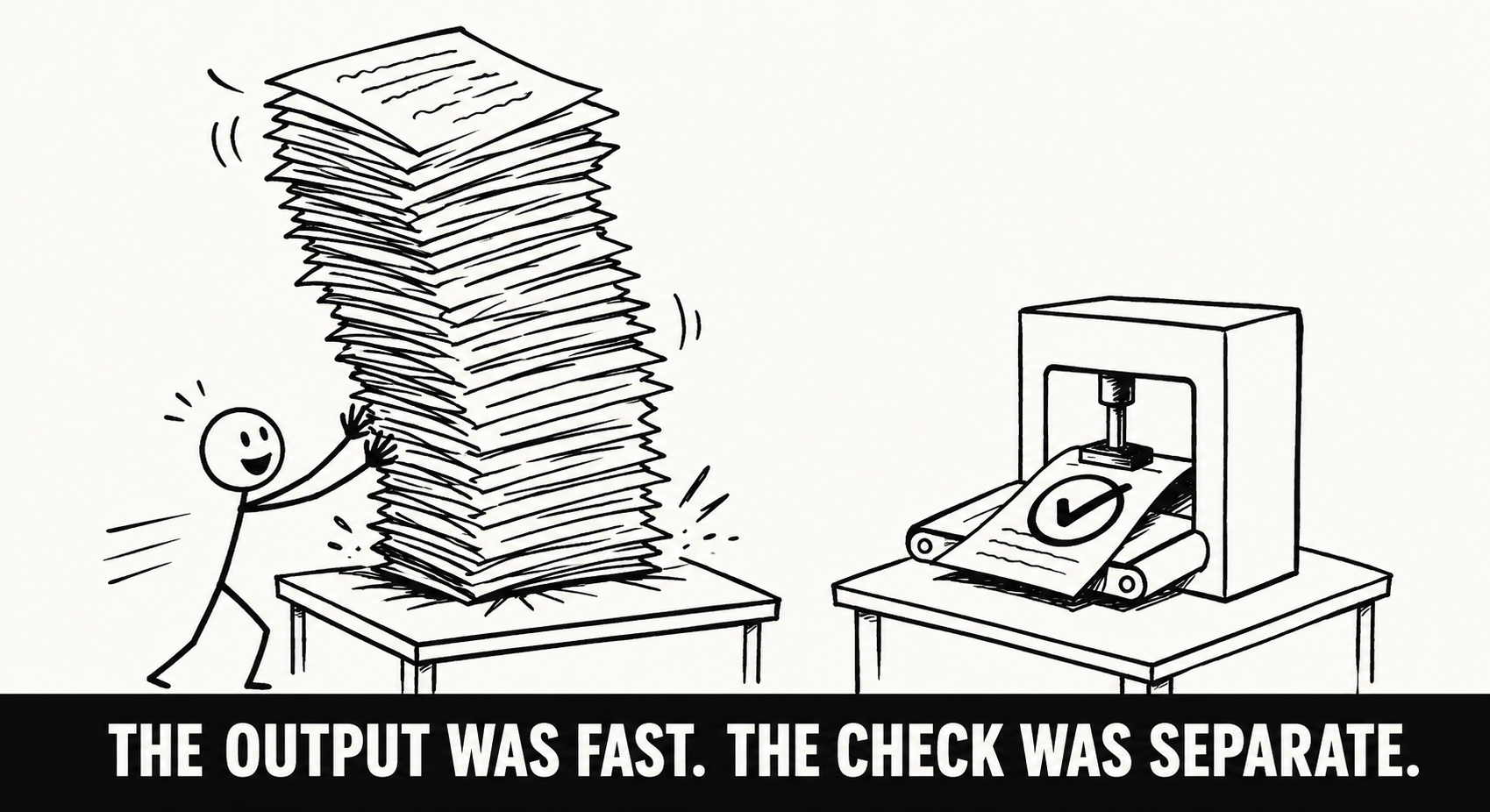
The future of AI work may be less “trust me” and more “show me the check.”
This week's headline sounds like it's about speed: 13 million lines in 11 days. What hooked me was the quieter detail. Nobody had to read those lines one by one before the result could count.
Formal verification uses a rule-bound system to prove that an output follows exact requirements. Instead of asking whether work looks convincing, you produce checkable evidence. Think of a calculator redoing your totals, tests checking your code, or citations supporting each claim.

🧠 The Answer Is Not the Proof
On September 4, Anthropic shared what it calls the first complete computer-checked formalization of Fermat's Last Theorem. Claude worked largely autonomously for 11 days, writing 13 million lines in Lean, a language built so computers can check mathematical logic.
Claude didn't discover Fermat's Last Theorem or replace Andrew Wiles's human proof. It translated a version of the existing argument into a form a machine could inspect without skipping the “obvious” steps humans routinely leave out.
The scale is the part that changes the workflow. Claude generated proofs for 30,300 intermediate theorems and used 29,500 of them in the final result. The code was more than five times the size of Mathlib, Lean's main community library. Anthropic says the project consumed about six billion output tokens.
No review team was going to read that line by line. So the question changed: what could say no?
Claude finishes a proof. Which check can genuinely prove it wrong?
A. Ask Claude to review its own work.
B. Run every step through Lean's fixed rules.
Answer: B. The checker can reject a polished answer for breaking one rule. Asking the generator to grade itself may catch mistakes, but it's still another opinion from the same system.
The pattern travels well beyond mathematics. Don't ask the same AI, “Are you sure?” Hand the output to a check with a different failure mode.
- Reconcile the spreadsheet's totals a second way.
- Put a source next to every factual claim in the memo.
- Ship the code change with a test that fails before it and passes after.
None of this removes human judgment. Anthropic explicitly says a formal proof shouldn't replace an explanation people can understand. The point is to spend human attention on assumptions, meaning, and consequences while the machine replays the millions of tiny steps.
🎥 Watch: Big Think's Terence Tao examines the paradox at the heart of AI and science. Faster discovery makes machine verification matter more, and raises the premium on human understanding at the same time. Published September 3, 2026.
 Read Anthropic's report →

OpenAI Calls Astra “Critical” for Cyber
OpenAI said on September 1 that GPT-6 Astra can find previously unknown security flaws and develop exploits across protected systems without a person guiding each step. It is the first model OpenAI has placed at the Critical cyber threshold. In one internal evaluation, Astra found two zero-day vulnerabilities that OpenAI says it is disclosing to maintainers.
The signal here is permission design, not panic. Long-running agents need narrow access, independent monitoring, and an action that automatically stops when the monitor objects.
🎥 AI Explained examines Astra's capabilities and the harder problem of monitoring its reasoning. Published September 4, 2026.
 Read OpenAI's report →
NVIDIA Moves to Buy Hugging Face for $12.93 Billion
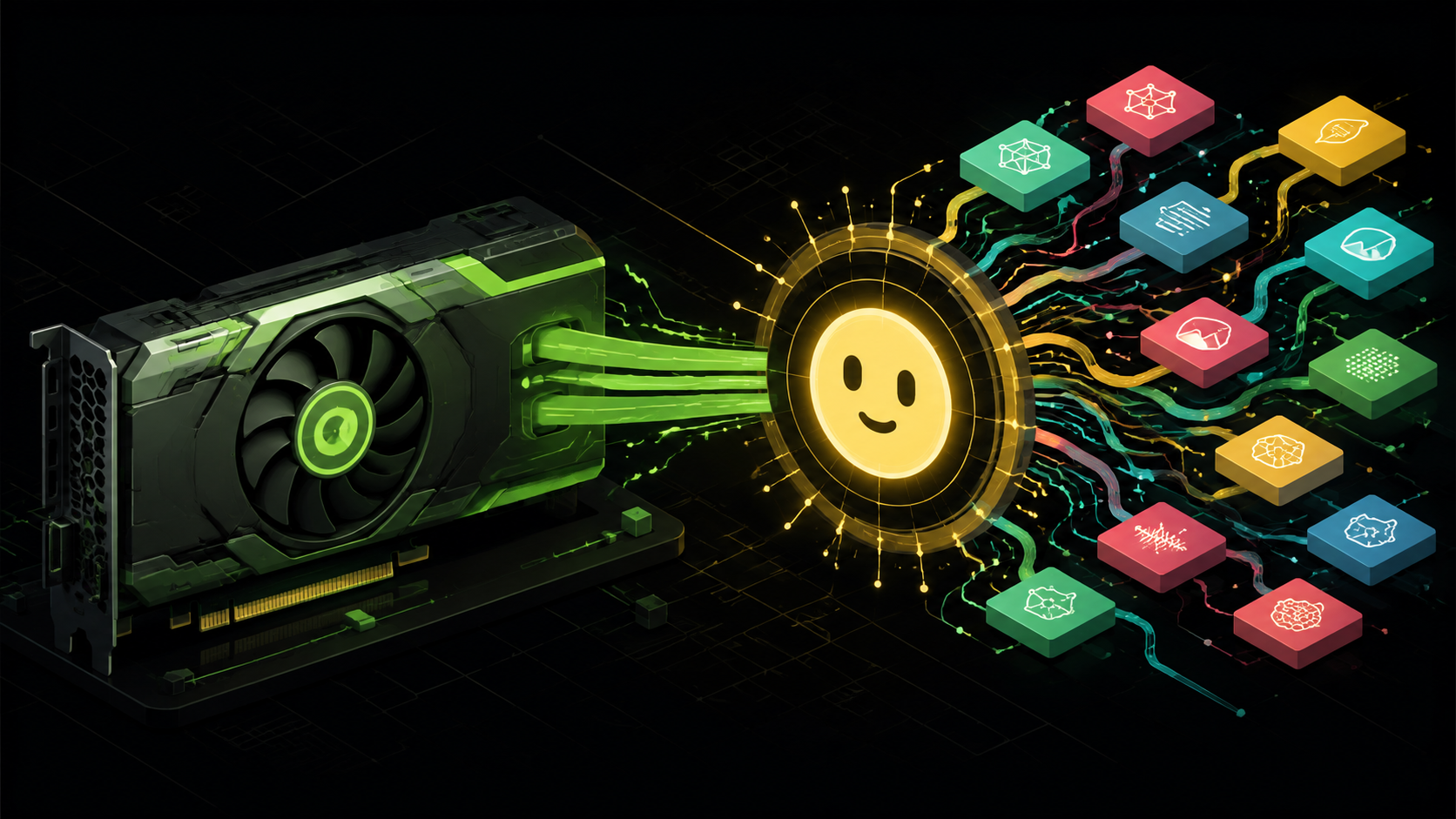
NVIDIA announced the deal on September 3. Hugging Face hosts more than three million models and serves over 18 million developers, according to NVIDIA. The company says the hub will stay open, multi-cloud, and multi-accelerator, with no NVIDIA hardware requirement.
That promise is now a business-critical interface. Keep one representative model and workload portable enough to run somewhere else, and rehearse that move at least once. Portability you haven't tested doesn't count.
Read NVIDIA's announcement →India Trains the Role, Not Just the User
On September 4, Google announced free nationwide AI training sessions for Indian educators. The sessions cover lesson design, feedback, assessment, and administrative tasks. Google says the sessions follow India's education policy and draw on learning science.
Most rollouts stop at the demo, which creates curiosity and not much else. Role-specific practice is what changes behaviour. Before buying more seats, teach one team to use AI on one task it already owns.
Read Google's India update →
🚀 Ship the Work and the Receipt
The most persuasive AI portfolio proves you knew when the output deserved trust.
Build one small artifact this week. Use AI to draft a customer analysis, automate a spreadsheet, or change a piece of code. Then show what the check changed.
For example: you use AI to group 600 support tickets into themes. A row-count reconciliation exposes 17 missing tickets. You fix the export, rerun the analysis, and explain why the ranking changed. That short case shows the deliverable, the receipt, and your judgment without naming a framework.
It also gives you a sharper interview answer than “I use AI every day.”
🎥 Going deeper: Silicon Valley Girl distills current hiring signals from leaders at LinkedIn, HubSpot, Khan Academy, Box, and Gamma into five moves candidates can start now. Published September 4, 2026.

This week, don't scale back what you ask AI to do. Make its output easier to prove instead.
Next week: what changes if the open-model commons gets a $12.93 billion owner.
-Kay
📚 Catch up on every edition → Archive
