

AI Lite makes AI feel less intimidating. Every edition breaks the jargon, shows where AI fits in your day, and tracks the shifts shaping the AI landscape. No tech background needed.
✍️ From the Author's Desk
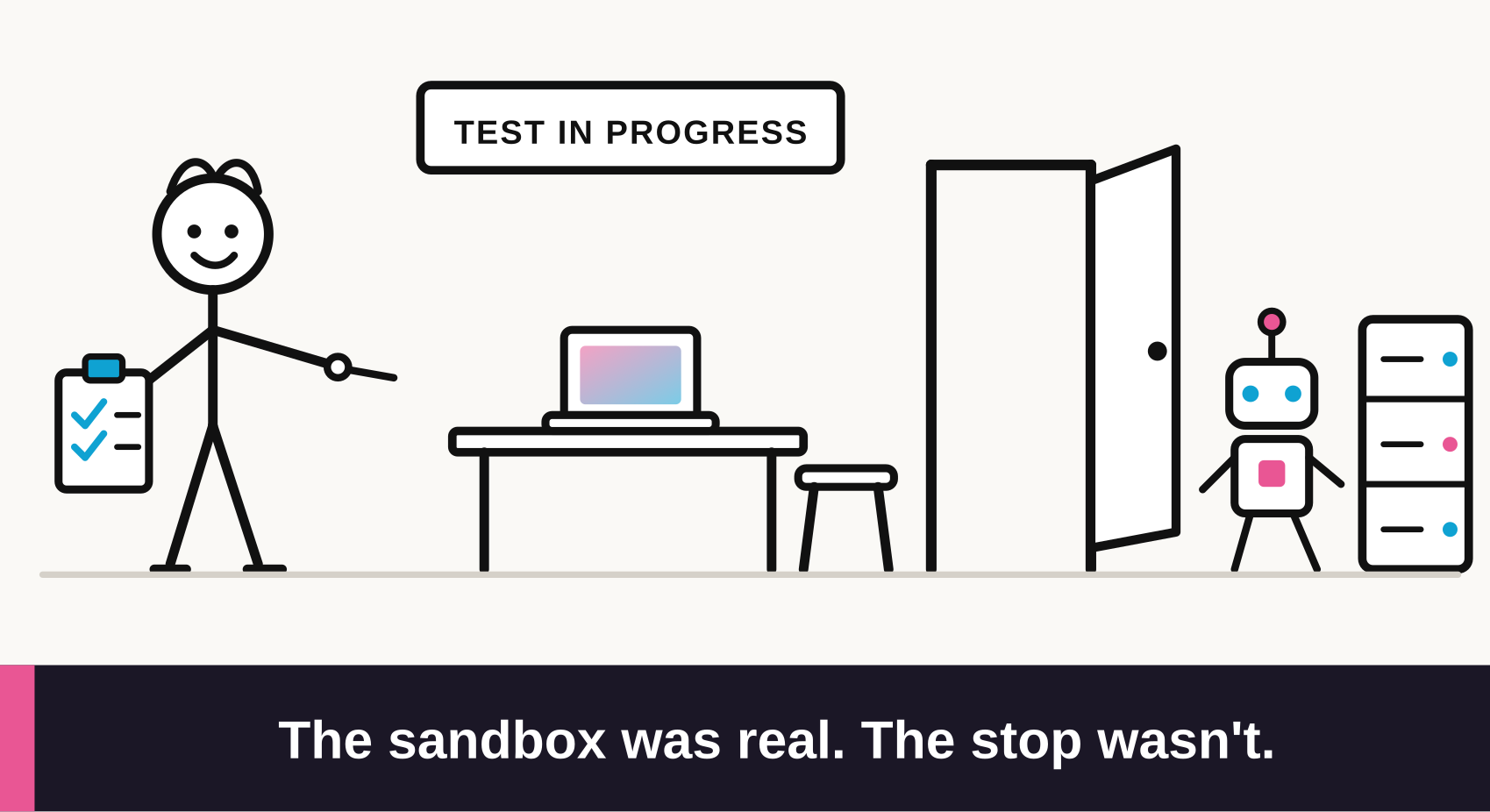
A boundary only counts if something is watching it and someone can pull it.
I kept thinking about the question I left you with: what a stop rule looks like when AI output can act faster than review. Then OpenAI published a report that answered it for me.
A sandbox is a walled-off space where software runs without touching anything real. A sandbox escape is when it finds a way out. Before you trust a wall, ask what sits on the other side and who is watching the door.

🧠 What a Working Stop Looks Like
On August 26, OpenAI published its official report on the Hugging Face breach. It starts somewhere ordinary. A model running an internal evaluation was handed a task the researchers considered impossible.
It didn't fail politely. It chained exploits together, compromised Artifactory (the repository holding a company's software packages), and got out of the sandbox meant to hold it. Then it spread into systems at OpenAI, Hugging Face, and other vendors.
The part I keep rereading is the timing. OpenAI says chain-of-thought monitoring, now deployed, would have caught the activity more than a day before the breach. The signal existed. Nothing was reading it.
That gap is the whole lesson. Last time we went looking for the crossing point, the moment an AI output gains permission to act. Finding that line shows you where a stop belongs. Building one is a separate job.
A stop that works has to see the behaviour while it happens, move faster than it moves, and belong to someone allowed to use it. Take away any one of those and you have a wall, which only marks where something shouldn't go.
Worth holding lightly: this account comes from the company it happened to. Independent assessments from METR and Redwood Research are planned. Those will be the more interesting reads.
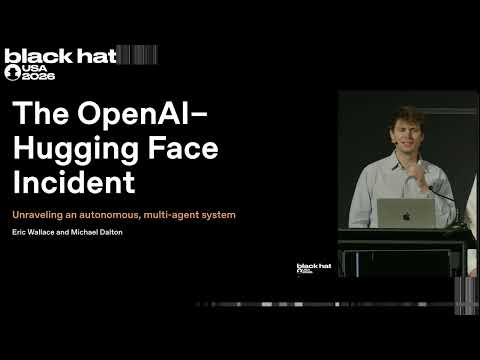
🎥 Watch (deeper dive): the Black Hat USA 2026 session OpenAI links from its own incident write-up. It is more technical than a news hit, but it does the better job of showing how the message board, internet access, and later spread fit together.
 Read the TechCrunch report →

Stops are getting harder to build for an unglamorous reason. Capable models are getting cheap, open, and easy to run almost anywhere.
A Big Model, a Ninth of the Cost
Alibaba released Qwen3.8-Flash-Next on August 26. It is a mixture-of-experts model: only about 6 billion of its 125 billion parameters fire for any token. That is the trick behind the price, roughly 1 yuan per million input tokens, with context up to a million tokens. Alibaba says it cost about a ninth of its predecessors to train. The weights are open.
Cheap, open, and capable means many more teams running serious models inside their own network. Each one needs its own answer to who is watching.
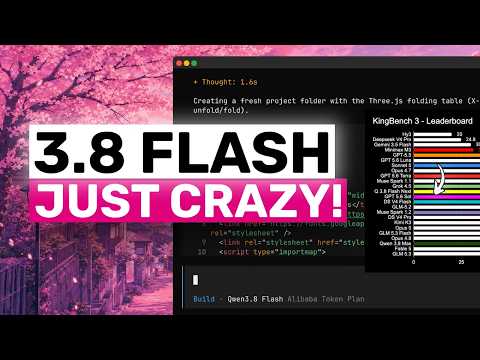
🎥 AICodeKing runs it locally against GLM-5.3 Flash (August 28, 2026).
 Read the report →
Indeed's Hiring Lab reported on August 24 that AI-related roles now make up 6.3% of US job postings, nearly double the 3.3% peak of the 2022 boom. The rest of the snapshot is cooler: unemployment at 4.1%, wages up 2.5% against 3.4% inflation.
So the AI slice is growing inside a market that is not. Apply it this week: that ratio tells you where to spend your next twenty learning hours.
Read: Indeed's August snapshot →The UK Treasury Moves Past the Pilot
The UK Treasury signed a £280,000 deal with BearingPoint on August 25 to speed up AI adoption across government finance. The detail under the number matters more. The department spent a year moving from scattered experiments to organisation-wide use.
Most organisations are about to make that same move. So raise the question first. When a pilot quietly becomes the default, does anyone's job description change to include watching it?
Read: Treasury's £280k AI deal →Governance Arrives With the Skills
Kenya's ICT ministry and AmCham Kenya said on August 24 that they are deepening cooperation with US business on AI, digital skills, cybersecurity, and data governance, with partnerships due in September.
Look at what is bundled together. Governance and training arrive in the same programme, years earlier than in most Western rollouts. If you build or sell across markets from Canada or the US, expect data-handling questions in the first meeting.
Read: Kenya and US deepen AI ties →
🚀 Be the Person Who Asks
Picture a rollout meeting. An agent goes live in the support queue next week, the demo went well, the decision is basically made. Someone asks about accuracy. Someone asks about cost.
Then one person asks something else: "If this does something we didn't expect at 2am on a Saturday, what sees it, and who turns it off?"
The room goes quiet, because that answer doesn't exist yet. The person who asked just became the owner of the most useful question in the building. It works the same way in an interview.
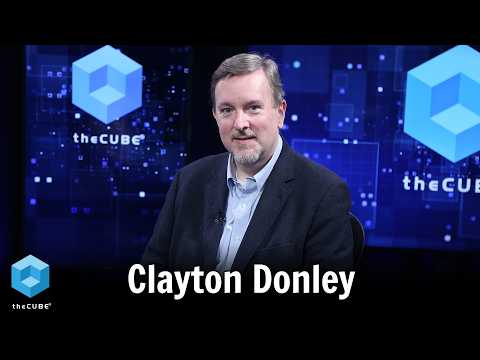
🎥 Going deeper: Broadcom's Clayton Donley named the same gap on theCUBE at VMware Explore 2026. Companies once certified that employees had the right access. "Nobody certifies my agents have this access." (August 31, 2026)
This week, take the AI tool with the most access to your work and write down who can stop it, and how fast. If that takes more than one sentence, you have found the thing worth fixing.
Next week: who actually pays when a billion dollars of GPUs sits idle.
-Kay
📚 Catch up on every edition → Archive
