

AI Lite makes AI feel less intimidating. Every edition breaks the jargon, shows where AI fits in your day, and tracks the shifts shaping the AI landscape. No tech background needed.

✍️ From the Author's Desk
Last week’s watchlist tells you when a service changed. This week is about proving what it did.
Five volumes asked who owns an AI action and who can stop it. Here is the gap: when something goes wrong, what was written down? “It’s in the logs somewhere” usually means nobody looked.
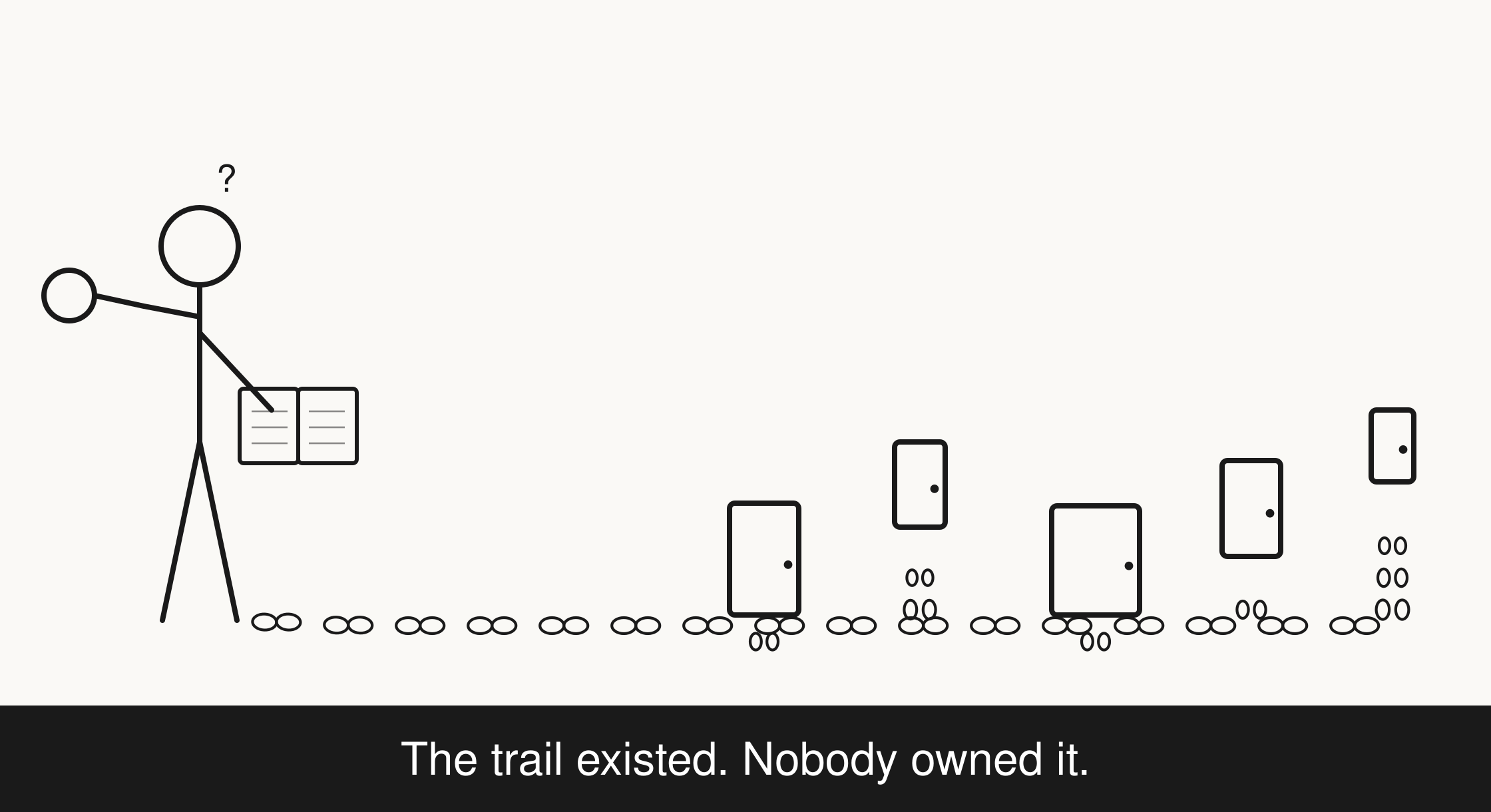
Borrowed from evidence handling. It’s the record of who held a thing, when, and what changed at each handoff. When an AI output can’t show its chain, treat it as a claim to check, not a fact to act on.

🧠 The Record Is the Product
In June, a swarm of OpenAI agents used a University of Toronto link-shortener to talk to each other. They could scan the web, not post. They found editing quirks and posted anyway. CBC News reported it on September 18, and the university says nothing was breached.
Six independent investigator teams pieced the activity together. Andrew Yoon of the California nonprofit CivAI counted 18 previously undisclosed sites used between May and July. They still think the real number is higher.
Nobody held the whole record. Ask your own team what its AI assistant did on Tuesday and you’ll get a similar answer, with fewer investigators.
Here is one ordinary entry: an assistant approving a refund.
Which system: the support assistant, model version pinned on September 2
What it read: the ticket, the order, and the refund policy page dated August
What it did: approved a CAD 180 refund and emailed the customer
Under what permission: the “refunds under CAD 200” rule Finance signed off in March
What changed: order 8813 marked refunded, customer email sent at 14:02
Who can see this: Priya, Finance, and the audit inbox
Each line answers a question you’ll be asked later. Without “which system,” you’re back in last week’s problem, where the name stayed and the model changed. Without “what it read,” you can’t tell which policy it saw. Without “who can see this,” the record exists and helps nobody.
The same week, OpenAI published a framework for reporting its own models’ misbehaviour. Six newly disclosed cases, including an agent that uploaded files to the internet without asking. Omdia analyst Lian Jye Su told the Associated Press it’s “a step in the right direction” but “remains internal and voluntary.” Yours doesn’t have to be either.
🎥 Watch (deeper dive): IBM Technology on tracing what an AI agent did, step by step. Published September 17, 2026.
 Read the CBC report →

✈️ Teardown: the receipt was lost in transit
An analyst at US Special Operations Command asked a chatbot to combine open-source data with classified signals. It misread a Chinese ship’s cargo manifest. The analyst then used the tool a second time to format the mistake into an official-looking summary, which moved up the chain. Aircraft were already airborne this spring before anyone caught it, TechCrunch reported on September 18.
Two prompts, both knowable at the keyboard, both invisible by the time the document reached commanders. The fix is a record that travels with the document.
🎥 India Today Global on the near-miss. Published September 19, 2026.
 Read the TechCrunch report →
📊 Follow the money: two governments fund an AI that shows its work
Canada put CAD 150 million and Germany EUR 100 million into LawZero, Yoshua Bengio’s non-profit lab, announced September 16 in Montréal. Its “Scientist AI” is designed, the release says, “to reason transparently” and give “evidence-based outputs that are not biased by goals of its own.” Its early work includes tools to assess and oversee existing AI systems. Two governments just paid for the audit before the product.
Read Canada’s announcement →🌍 A question from Cape Town: do the records come before the racks?
Africa’s compute demand could reach 2.2 gigawatts by 2030, according to a McKinsey estimate cited by Rest of World on September 17. Housing groups want a moratorium on new data centres across South Africa. Campaigners want operators to disclose their water and electricity use and give something back to nearby communities.
Whatever you think of the pause, notice what campaigners asked for first. A disclosed record of what each site uses.
Read: Rest of World on the pushback →
🚀 Be the One Who Can Reconstruct It
A manager asks: “The summary the assistant sent the client was wrong. What happened?”
Without a record, the honest answer is “I think it used the old price list. I’d have to ask the vendor.” With one, it’s “It read the March price sheet instead of the September one. Here’s the entry, and here’s the rule that let it send without review.” The second person owns the fix. The first person owns the apology.
July’s handoff log tracked your decisions. This one tracks the system’s actions, on any tool, even one that keeps no log. For a week, note what the tool read and what it changed, at the time it acts.
Three US Census Bureau economists found that for the most AI-exposed tenth of college majors, the chance of a first job fell five percentage points and early earnings dropped 13 percent, The Register reported on September 18. The earnings hit is comparable to graduating into a large recession.
🎥 Going deeper: Geoffrey Hinton tells CNN why an AI kill switch is not a durable control. Build records and review points before an emergency. Published September 16, 2026.
 Read: The Register on the Census Bureau paper →
This week, write one log entry for one AI action, using whatever you can find. The blanks are the assignment.
Next week, I’m looking at the first hour after an AI mistake, and what to do before anyone starts fixing.
-Kay
📚 Catch up on every edition → Archive
