

AI Lite makes AI feel less intimidating. Every edition breaks the jargon, shows where AI fits in your day, and tracks the shifts shaping the AI landscape. No tech background needed.
✍️ From the Author's Desk
Last week we looked at the AI inside your apps. This week: the AI that watches you use them. It tracks your keystrokes, your screen time, your activity. And sometimes it shares that data with companies you've never heard of. Here's what your employer can (and can't) do with it.

🧠 The AI That Watches You Work
Workplace AI monitoring (also called "bossware") is software that uses AI to track and measure what employees do during work hours. Most workers don't know how much it collects.
What it can track:
- Keystrokes and mouse moves: typing speed, clicks, idle time
- Screenshots: snapshots of your screen, every few minutes
- App and website use: what you open and how long you stay
- Messages: some systems scan email and chat content
- Location: GPS on company devices (3 of 9 tools in one study did this)
- Meetings: camera on/off, speaking time, "engagement"
Three types to know:
| Type | What it does | Example |
| Passive | Runs silently in the background | Keystroke and idle-time logging |
| Active | Shows managers data in real time | Live screen viewing, productivity scores |
| Predictive | Uses AI to flag patterns and predict | "Flight risk" and burnout scoring |
The mindset shift
The old model was "clock in, clock out." The new one is constant. AI doesn't just check if you're working. It measures how, builds a profile, and may share it with outside firms.
🎥 Watch (deeper dive): ABC7 News on California's move to regulate AI at work (May 22).

💡 Your Boss's "Bossware" Is Sharing Your Data with Google, Facebook, and 145 Other Companies
A Northeastern University study (May 21) found nine popular monitoring tools (including Hubstaff, Time Doctor, and Deputy) share worker data with Google, Facebook, Microsoft, and 145+ other domains.
Most workers think monitoring data stays between them, their boss, and the software. It doesn't. Your work activity may feed the same ad networks that track your personal browsing. The question isn't whether you're watched. It's whether the data stays where you think it does.
🎥 CBS 8 San Diego on Newsom's first-in-the-nation order on AI workplace disruption (May 22).
 Read: Worker data is ending up with third parties →
💡 California Signs First-in-the-Nation Executive Order to Protect Workers from AI Disruption
On May 21, Governor Newsom signed an executive order telling state agencies to prepare workers and small businesses for AI-driven job loss. It's the first of its kind from any U.S. state.
This treats AI job loss as a policy problem, not just a market trend. If you work in California, it shapes your safety net. If you don't, watch closely: other states tend to follow. AI isn't only changing your tools. It's changing what protections exist when AI replaces the work itself.
Read: Newsom signs executive order to protect workers from AI →💡 Pope Leo XIV's First Encyclical Warns: AI Must Never Decide Life or Death
On May 25, Pope Leo XIV released "Magnifica Humanitas," the first papal document focused fully on AI. It calls for strong regulation and warns that "machines must never decide life or death."
This is a global policy signal from an institution representing 1.4 billion people. Its warning about workers being "reduced to data points" is exactly what this week's Learn section describes. When the Vatican calls AI a threat to dignity at work, the question shifts from "is AI useful?" to "who does AI serve?"
🎥 BBC News on the Pope's first encyclical and why his AI warnings matter (May 29).
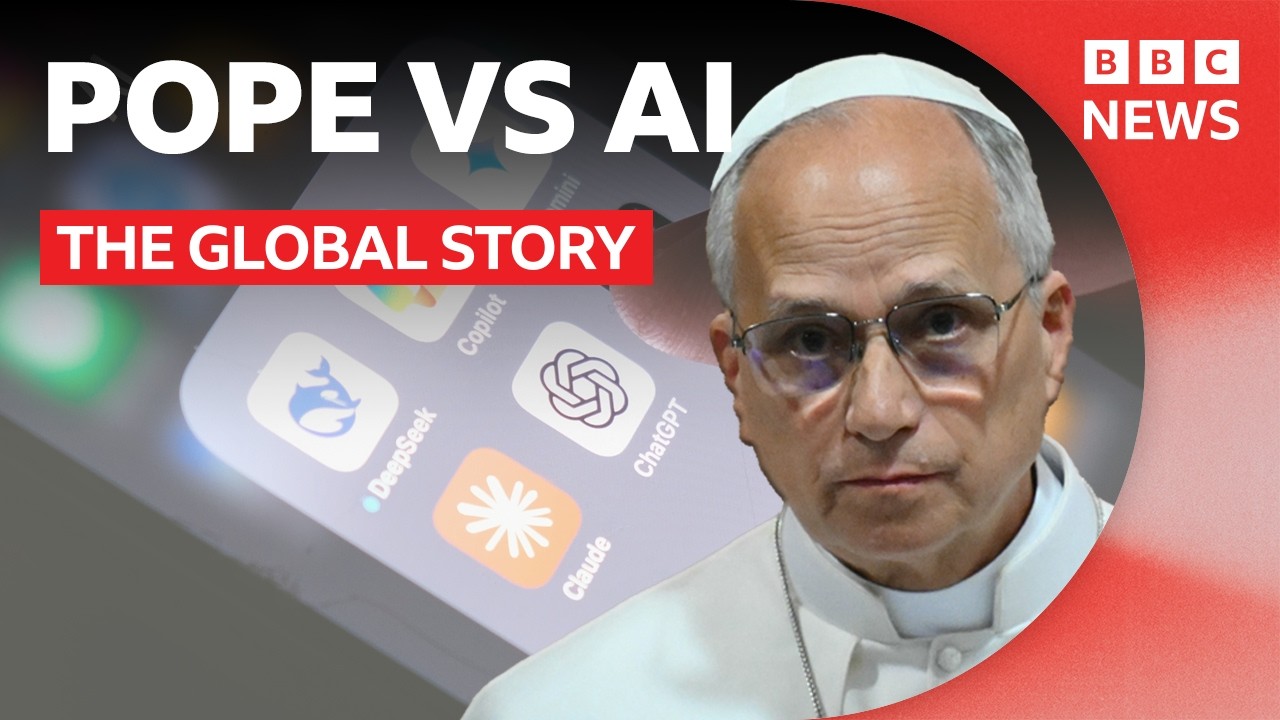 Read: Pope Leo Uses First Major Papal Text to Warn About AI →

🚀 Your Workplace AI Governance Talking Point
When monitoring comes up, someone always says "I've got nothing to hide." Here's a sharper framing:
Why it works at every stage:
| 🎓 | Early career: Shows you understand AI governance, not just AI tools. |
| 🔄 | Career switchers: Shows you can size up a company's AI practices before joining. |
| 🧭 | Leaders: Signals you weigh trust, data liability, and compliance, not just speed. |
🎥 Going deeper: Future of Life Institute on how AI is reshaping the job market (May 22).
This week, before you assume your employer only tracks your hours, ask: what else is measured, who sees it, and is there a policy for it?
Next week: the AI that learns your voice, your face, and your writing style, and what happens when it gets good enough to impersonate you. Deepfakes, synthetic media, and the trust problem no one has solved yet.
-Kay
